community and nation
rethinking the State

Much of law and jurisprudence consists of innate mechanisms that defuse their normative pillars. Especially in terror legislation and concomitant determinations of criminality, priority is given not to liberal values of individuality and personal freedom, but instead to the paramount interest of the State. In the modern day at least, there is the idea that the normal order of things may have to be interrupted for reasons external to the political community (which I’ll refer to as the Exception). This idea is robustly exploited to advance certain interests, which are held as crucial to the functioning of the State.

The discourses on Exceptions and State power that illuminate the exercise of that power, such as in legal judgements or administrative decisions, are framed in a particular way; the pivot around which they are activated is the State as a tangible construct. Modern political theories view the State as an extension of a sovereign body of citizens, within whom power rests. However, the practical functioning of this entity is self-referential. Judith Butler discusses this in her discussion on governmentality, extending Foucault’s theories to deal with the question of sovereignty.1
In Indian jurisprudence, the security of the State is accepted as a given. Courts frequently allow the executive to invoke itself as a reason for why a particular decision is necessary— especially in cases where the constructed image of the nation is slandered — despite infringing on the rights of the people who belong to that political community.
One way of understanding this is in the explanation that India, as it is, is not a nation in the modernist understanding of the term. Due to the nation-state’s temporal proximity to Enlightenment, it was premised on the idea of a political community composed of equal citizens. This was accompanied by the historical growth of popular systems and the extension of voting rights in the West.
However, especially since 2014, India is projected as a nation that belongs to those who are the vestiges of a glorious past, an imagined community with a meticulously controlled demographic composition. The attacks on citizenship and the landless working class, and the act of restricting participation only to those wielding social and economic capital,2 are a complete antithesis to the Enlightenment goal of liberty and equality.
In Nationalism without a Nation, G Aloysius claims that India was never a nation (in the political theory sense of the word) to begin with — the contours of the Indian independence movement were determined by the country’s social and political elites. The barriers of caste that structured certain communities outside the domain of decision-making also excluded them from the nation-building process. Much of this exclusion seeps into the way State power is structured even in constitutional processes, which, despite having liberal goals, fail to respond to the needs of the masses in an appropriate way. Effectively, most of the country was (and is) excluded from the participatory processes of nation-building.
Furthermore, the diverse identities that are extant within the country actualise in multiple ways — the interests of religious consolidation impacts the interaction between caste groups; tribal communities repressed by State power endorse its use when illegal immigration installs itself as a fear-driven belief; notions of purity become relaxed when compelled by the needs of capital. What results is a lattice of interests that intersect every other way.
These cross-cutting interests have left as the only enduring social identity (in the public sphere) that which is tied to the “interests of the State”; an abstract notion constructed in the pursuit of vested interests. This concept-in-flux provides no normative framework to tie the rights of the people within that nation, thereby allowing those rights to be easily eroded. Constitutionalism, which is supposed to provide this normative framework, exists largely as a substance-less form that is meant to automate a supposedly water-tight mechanism of guaranteeing liberty.
Michael Walzer says that a State can wage just war when it is necessary to protect its community from an external threat that could lead to the “the coercive transformation of their way of life”. Even if there is a responsibility to follow the rules and principles of law, these can be negotiated when the circumstances warrant it.
In a country like India, the “way of life” that must be protected is that of a fictional community whose practices are carefully curated to justify and enforce the oppression of Others. The hyper-masculine jingoistic agenda of the Right is presented as an innate quality of a glorious people so that capital can steam ahead, unabated, and caste hierarchies can be fossilised even further. All atypical communities are suspect and can be at risk of exclusion at any time.
All of this is a cause and consequence of the lack of community; community in a sense that reverberates throughout intersecting identities. Defenders of modernism and the Enlightenment project emphasise that a political community is one that is founded on a liberty that aims at the full emancipation of the individual person, unburdened by a deficit of recognition. Committing to that means negotiating our identities in a way that allows each of us to complement ourselves and develop our best abilities; there can be no space for hierarchy in identity.
How do we move toward this? Well, working with the law has taught me that faith in its processes can only get you so far. It’s good to stitch a few wounds, but not enough to nourish the things that will manifest community.
It is a difficult task to cultivate community. Moving beyond our culturally fixed ways of viewing the world takes effort and empathy, allowing one to retain their sense of self while recognising that the same has to be afforded to those different from us. What we consider as normal to our way of being is a social practice embedded by decades or even centuries of historical progression.

The goal is to recognise these underlying foundations of these practices so that we can retain that which strengthens our identities as well those of the different people around us. Instead of clinging to an ideology whose sole objective is to dismantle our bonds, we should commit to an ideal that cements them. Perhaps empathy is one way to start.
Foucault argues that the State has stopped relying on notions of sovereignty to justify its power; power now comes from the fact that the role of the State has changed into a managerial figure responsible for “caring” for its people. Butler agrees, but claims that sovereignty still exists and the State’s sovereign role is invoked in managing the population.
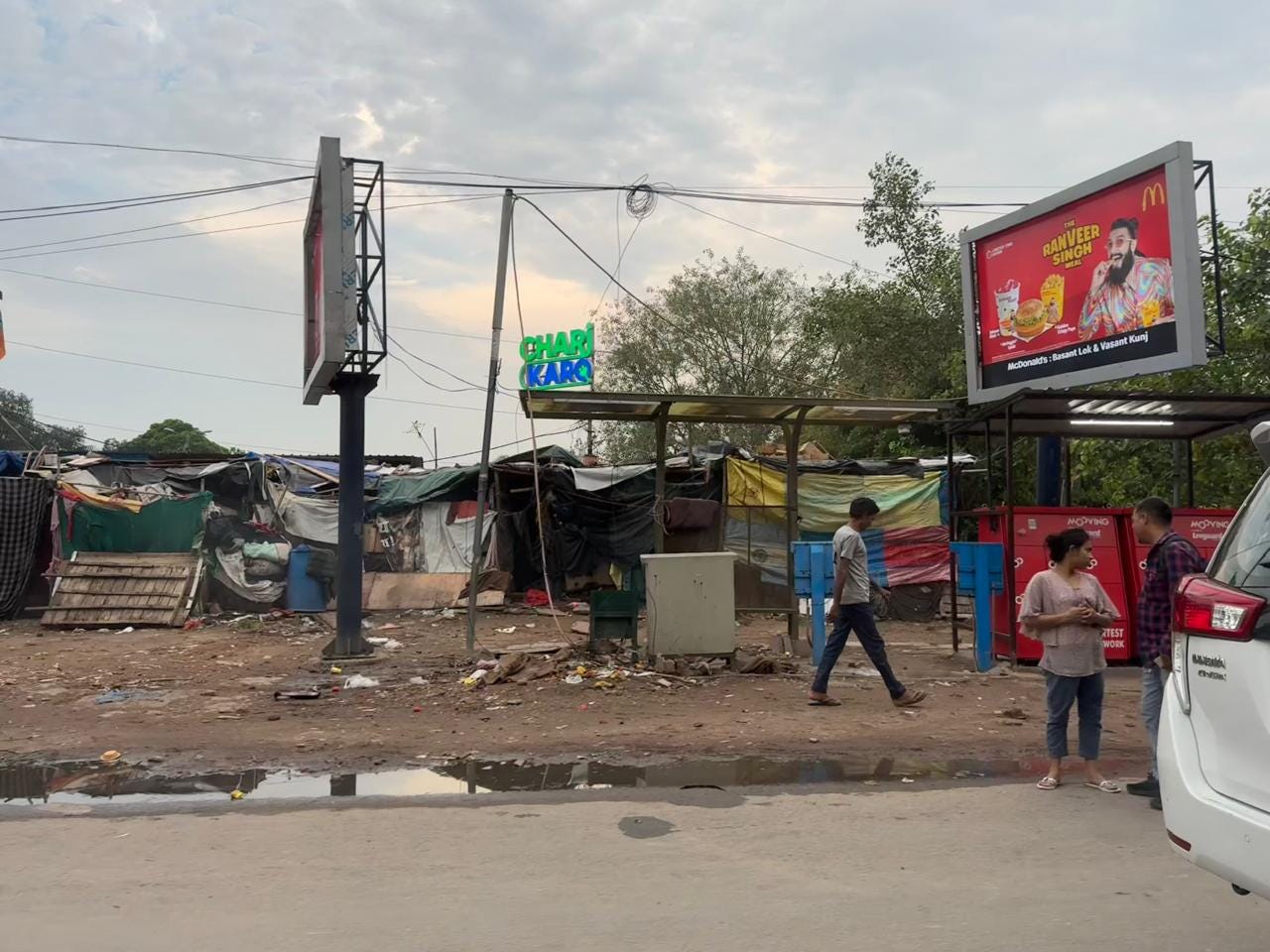
See the recent spate of slum demolitions and displacement in Delhi, alleged “foreigners” being clandestinely detained and relocated, and the revision of electoral rolls.